The Hague Tickets

Plan your visit to the Royal Delft Factory & Museum

The Royal Delft Factory and Museum is a working pottery factory and museum best known for its hand-painted Delft Blue ceramics. The visit is compact rather than overwhelming, but it’s richer than many people expect because you move between live production spaces, historic displays, and contemporary exhibits on one route. The biggest difference between an okay visit and a great one is timing around the painters’ studio and workshop schedule. This guide covers arrival, tickets, pacing, and what to prioritise once you’re inside.

Quick overview: Royal Delft Museum at a glance

  • When to visit: Open daily, typically 9:30am–5pm; weekday mornings outside July–August are noticeably calmer than late morning and early afternoon in summer because coach groups and workshop visitors overlap then.
  • Getting in: From €17.50 for standard entry, with guided visits and workshops costing more and painting workshops usually from about €48.50; standard entry is often fine as a walk-in, but workshops and peak summer slots are worth booking ahead.
  • How long to allow: 1.5–2 hours for most visitors, with extra time needed if you want the brasserie, gift shop, or a painting workshop.
  • What most people miss: The ceramic rooms and architectural pieces, plus the courtyard details that show how Delftware was used far beyond plates and vases.
  • Is a guide worth it? Yes, if you want deeper craft context on a first visit; otherwise, the included audio guide does a good job for less.

🎟️ Workshop slots for the Royal Delft Factory and Museum sell out a few days in advance during summer and school holidays. Lock in your visit before the time you want is gone. See ticket options

Jump to what you need

Where and when to go

💡 Pro tip

If you want both the museum and the painting workshop, book standard entry for late morning and eat before 1pm — the 2pm workshop is much more enjoyable when you’re not rushing the factory route first.

How much time do you need?

Visit typeRouteDurationWhat you get

Highlights only

Intro film → painters’ studio → factory floor → 'Night Watch' mural → shop

1–1.5 hours

You’ll see the live craft and the headline pieces, but you’ll move quickly and likely skip the quieter ceramic rooms and courtyard details

Balanced visit

Intro film → full factory route → collection galleries → ceramic rooms → courtyard → shop or brasserie

1.5–2 hours

This is the best fit for most visitors because it adds the historical context and architectural ceramics without turning the visit into a long museum day

Full exploration

Full route → extended gallery time → painters’ studio pause → brasserie break → Paint Your Own Delft Blue workshop

3–4 hours

This gives you the full Royal Delft experience, but it only makes sense if you genuinely want the workshop or slower time with the collection

Which Royal Delft Museum ticket is best for you

Ticket typeWhat's includedKey benefitDurationBest forPrice range
Entry tickets

Admission to the factory & museum + audio guide (8 languages)

Freedom to spend extra time in the painters' studio or the brasserie

Flexible (1.5–2 hours recommended)

Independent travelers who want a flexible, deep dive into the factory at their own pace

From €17.50

Day tour from Amsterdam

Round-trip transport, guided tour of 3 cities, and Royal Delft entry

Logistics are handled; covers Rotterdam and The Hague in addition to Delft

~9 hours (Full day)

Travelers based in Amsterdam who want to see three major Dutch cities in one day

From €57

How do you get around the Royal Delft Factory and Museum?

Where are the masterpieces inside the Royal Delft Museum?
Royal Delft painters studio
Night Watch tile mural at Royal Delft
Royal Delft factory floor
Ceramic rooms at Royal Delft Museum
Antique Delftware collection
1/5

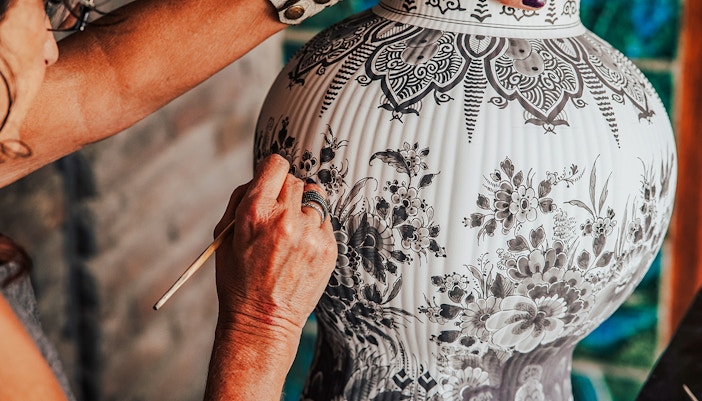
Master painters at work

Artist: Contemporary Royal Delft artisans

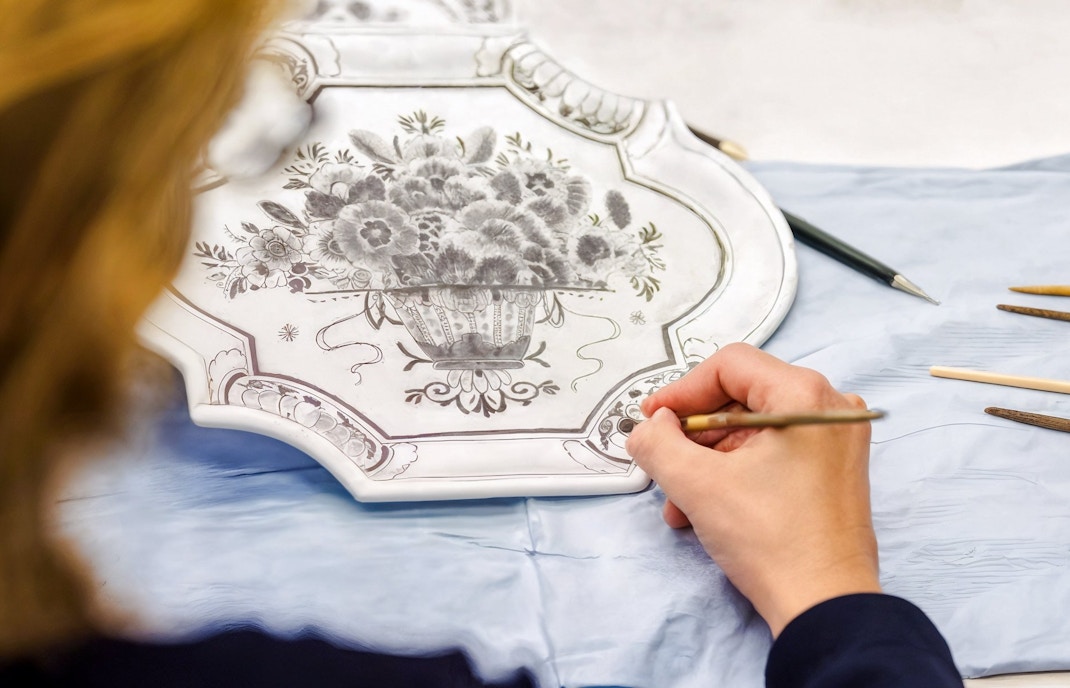
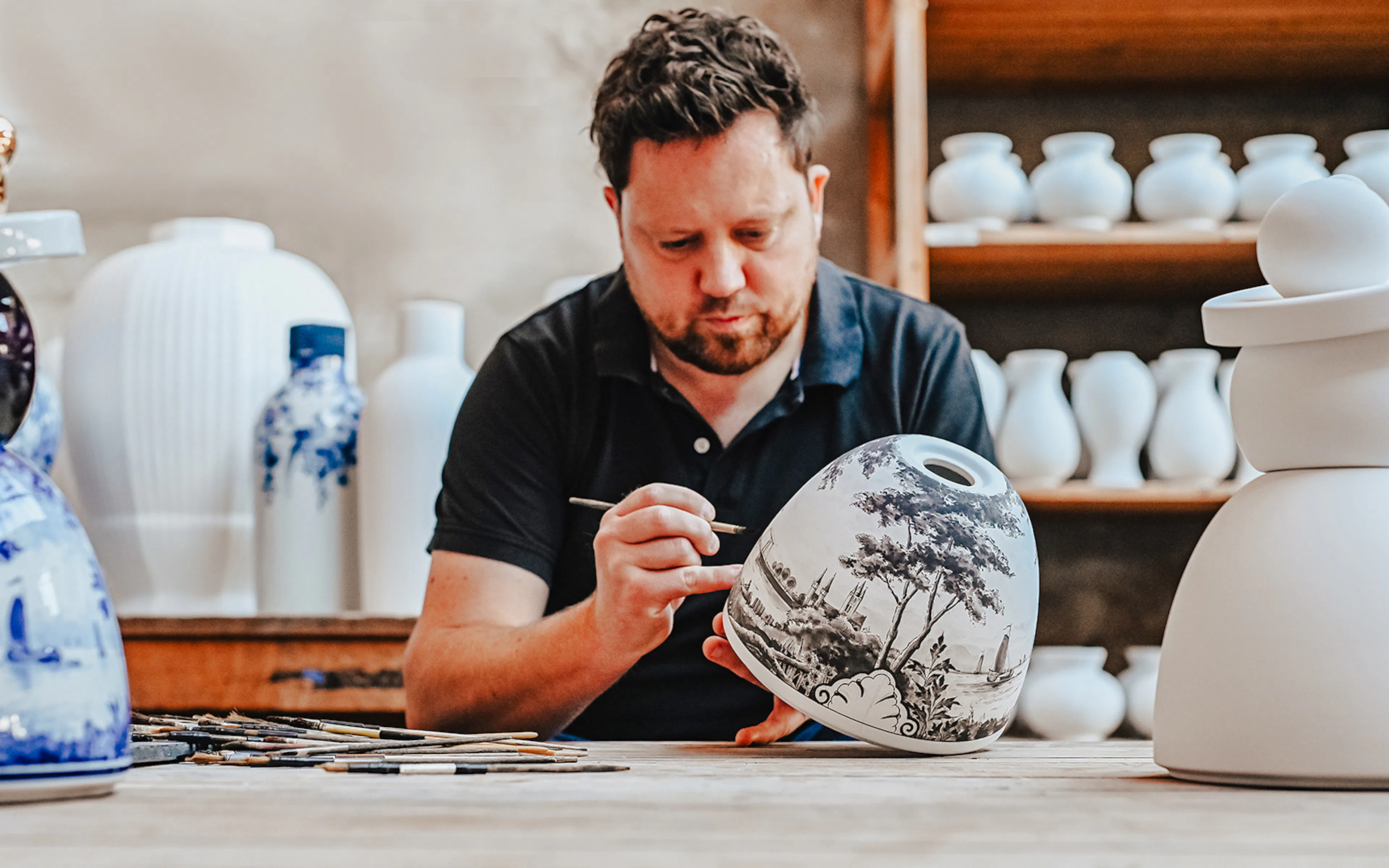
This is the most distinctive part of the visit because you’re watching hand-painting happen in a working factory, not behind a recreated display. Slow down here and look at how the brushwork builds from light sketch lines into finished decoration. What most visitors miss is that the paint looks dark before firing — the famous blue appears later in the kiln.

Where to find it: In the painters’ studio along the factory route, after the production areas.

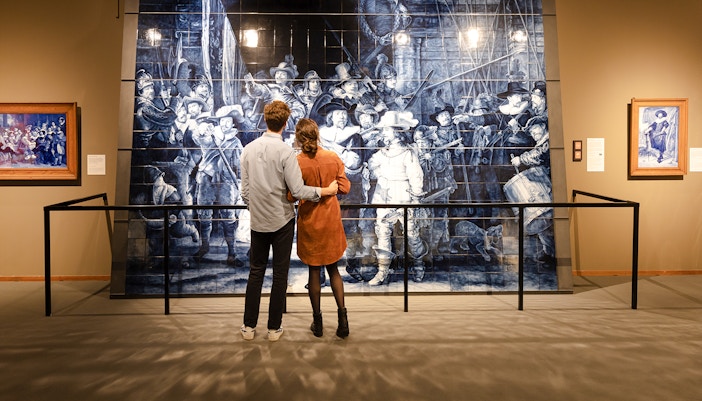
Delft Blue 'Night Watch' mural

Artist: 480 hand-painted ceramic tiles inspired by Rembrandt

This is the piece that shows how ambitious Delftware can be when it moves beyond plates and souvenir tiles. From a distance, it reads like a familiar Dutch masterpiece; up close, you can see how each tile carries its own brushwork and joins into a single image. Many visitors photograph it quickly and miss the tile-by-tile detail.

Where to find it: In the museum collection galleries after the factory section.

Historic factory floor

The factory floor matters because it turns the museum from a history lesson into a live process. You’ll see how moulds, drying shelves, glazing, and kilns fit together, which makes the finished pieces in the galleries far more meaningful. What people often miss is the contrast between older workshop traditions and the limited modern equipment still used on-site.

Where to find it: Midway through the self-guided route, between the intro spaces and the collection rooms.

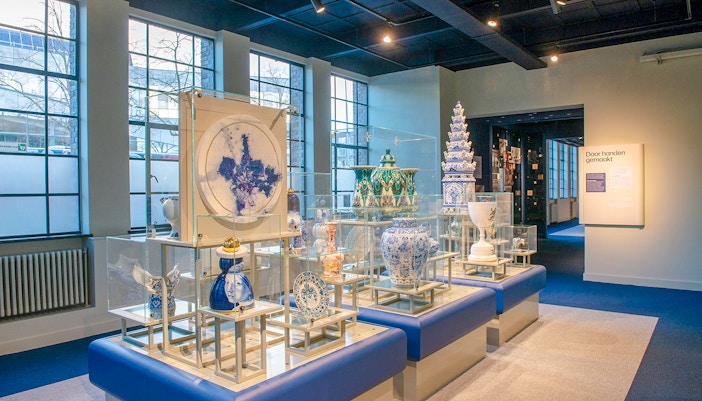
Ceramic rooms

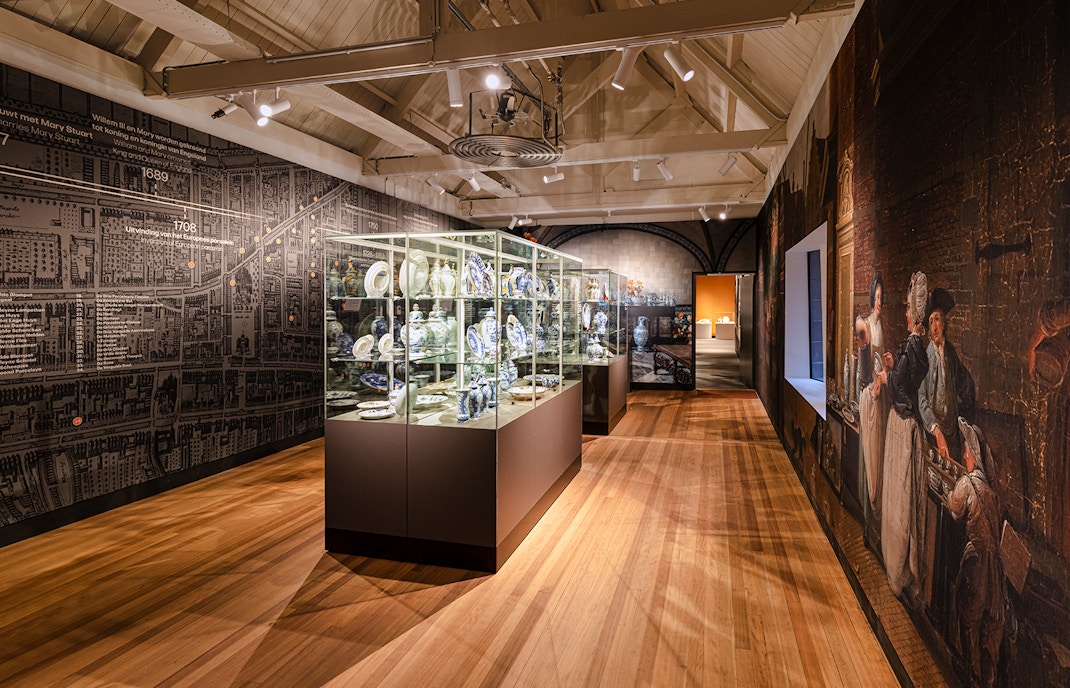
These rooms show the scale Royal Delft could work at, especially in architectural commissions and larger decorative pieces. They’re quieter than the painters’ studio, so people often skim them, but they add the missing context that Delftware was made for buildings and formal interiors too. Look for how tiles and panels were designed to function in space, not just on a shelf.

Where to find it: In the later museum rooms beyond the main collection highlights.

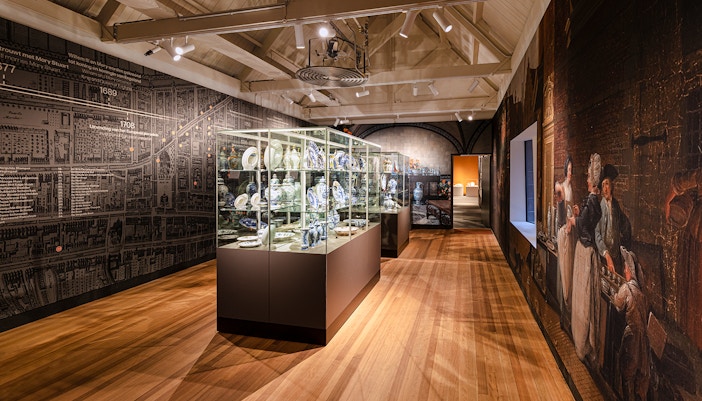
Antique vases and royal commemorative pieces

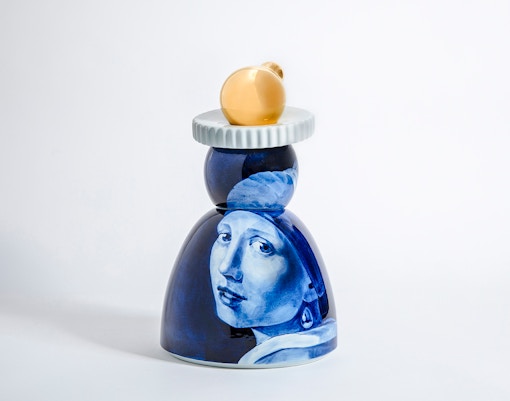
This is where the brand’s long history becomes tangible. The shapes, royal commissions, and decorative styles show how Royal Delft evolved while staying tied to its blue-and-white identity. Many visitors glance at the labels and move on, but the dates and commissions are what reveal how closely the factory was tied to Dutch ceremonial life.

Where to find it: In the permanent collection galleries toward the end of the museum route.

💡 Don't leave without seeing

...the ceramic rooms and courtyard details — they’re easy to miss because most visitors focus on the live painters and head straight to the shop afterwards.

Facilities and accessibility

  • 🍽️ Brasserie 1653: The on-site brasserie serves light meals, coffee, and High Tea, and it’s worth using if you want to turn the visit into a slower half-day rather than just a quick museum stop.
  • 🛍️ Gift shop/merchandise: The museum shop is on-site at the end of the route, and it’s the best place to buy authentic Royal Delft pieces rather than generic Delft Blue souvenirs.
  • 🅿️ Parking: Free on-site parking makes this one of the easier Delft attractions to visit by car, especially if you’re coming from Rotterdam or The Hague.
  • 🩺 First aid/medical station: Staff are on-site throughout the visitor route in this actively managed museum and factory setting.
  • 🪑 Seating/rest areas: The brasserie and courtyard are the easiest places to pause if you want a sit-down break during or after the visit.
  • Mobility: Most of the museum and factory route is wheelchair-friendly, ramps and elevators cover the main route, and wheelchairs are available to borrow on-site.
  • 👁️ Visual impairments: The included audio guide in 8 languages adds useful spoken context, especially in the production and collection areas where the story matters as much as the object labels.
  • 🧠 Cognitive and sensory needs: The calmest visits are usually weekday mornings outside summer, when the route feels less crowded and the active factory spaces are easier to take at your own pace.
  • 👨‍👩‍👧 Families and strollers: The mostly level route makes stroller use manageable through most of the visit, though busy mid-day group arrivals make movement slower than early starts.

Royal Delft works well with children who enjoy making, drawing, or seeing how things are made, and it’s a better fit for curious school-age kids than for toddlers who need lots of free play.

  • 🕐 Time: 60–90 minutes is realistic with younger children if you prioritize the painters’ studio, the live factory floor, and one short gallery stop.
  • 🏠 Facilities: The brasserie and courtyard are your best reset points if children need a snack break or a quieter pause.
  • 💡 Engagement: Turn the visit into a game by asking children to spot how many different forms Delft Blue appears in — tiles, vases, plates, and architectural pieces.
  • 🎒 Logistics: Bring a small bag and aim for opening time, because the route is easier with children before coach groups and workshop participants arrive.
  • 📍 After your visit: Delft’s old center is close enough for a canal-side walk and a relaxed post-museum treat once you’re done.

Rules and restrictions

Practical tips

  • Book the painting workshop at least a few days ahead in summer and school holidays, because entry tickets are flexible but workshop places are limited and often the first thing to fill.
  • If you’re doing only the museum, weekday opening time is the sweet spot — you’ll get a clearer view of the painters’ studio before tour groups and 2pm workshop traffic change the pace.
  • Save your energy for the live factory and painters’ room, because that’s the part you can’t really recreate later by reading labels or browsing the shop.
  • Bring a small bag, not a bulky daypack, so you can move comfortably through the production route and galleries without feeling like you’re constantly in other people’s space.
  • Eat either before you arrive or after the museum route unless you’re making a half-day of it, because stopping too early breaks the flow and makes the compact visit feel more disjointed than it is.
  • If you’re walking from Delft station, give yourself the full 20 minutes rather than assuming it’s in the middle of the old town — arriving rushed is the easiest way to miss the intro film and start the visit out of sequence.
  • Don’t treat the ceramic rooms as the ‘extra’ part of the museum; they’re where you see how Royal Delft moved from tableware into architecture and large-scale decorative work.

What else is worth visiting nearby?

Eat, shop and stay near the Royal Delft Museum

  • On-site: Brasserie 1653 serves light meals, coffee, and High Tea, and it’s the simplest option if you want to stay on-site rather than walk back into central Delft.

Better options nearby:
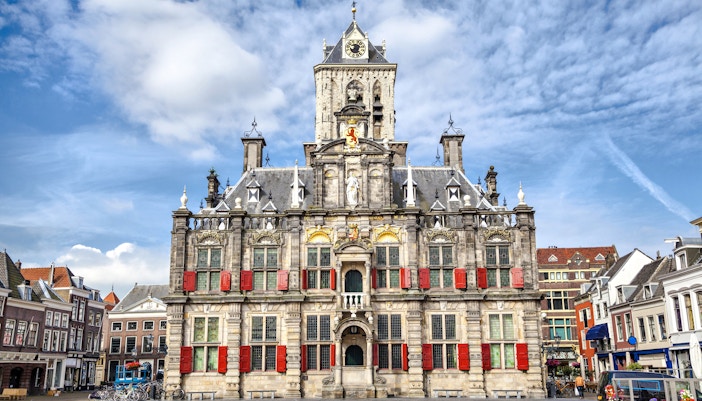
Delft city center has the strongest concentration of cafés and sit-down restaurants, about 15–20 minutes on foot after your visit.

  • Best around Market Square: If you want a fuller lunch or dinner, save it for the old centre, where you’ll have more choice and a better canal-side setting than the museum edge.
  • Quick stop strategy: The museum brasserie works best for coffee or a light lunch, while the centre is the better call for a proper meal after sightseeing.

Pro tip: If you’re joining the 2pm painting workshop, eat before 1pm or wait until afterward — trying to squeeze lunch into the middle makes the visit feel more rushed than it should.

  • Royal Delft Museum Shop: This is the best place on-site for authentic Royal Delft ceramics, from smaller keepsakes to serious collector pieces, right at the end of the visitor route.

Staying right by Royal Delft Museum is practical only if your priority is easy parking or a very quiet base. For most travelers, Delft’s old center is the better choice because it’s more walkable, more atmospheric, and much better placed for evening food and canalside wandering after the museum closes.

  • Price point: The area around the museum is usually more functional than charming, while central Delft gives you more mid-range choices and better value for a short stay.
  • Best for: Visitors arriving by car who want a quieter overnight base and don’t mind walking or using local transport into the center.
  • Consider instead: Stay in Delft’s old town or near the station if you want restaurants, canals, and easier access to the city’s main sights, or choose Rotterdam if you want a bigger city base and a quick regional day trip.

Frequently asked questions about visiting the Royal Delft Factory and Museum

Most visits take 1.5–2 hours. You can do a quicker 60–90-minute route if you focus on the factory, painters’ studio, and headline galleries, but add more time if you want the brasserie, the shop, or the painting workshop.