Quick Information

RECOMMENDED DURATION

2 hours

EXPECTED WAIT TIME - STANDARD

30-60 mins (Peak), 0-30 mins (Off Peak)

Did you know?

The Mauritshuis was originally built between 1633 and 1644 as a residence for Johan Maurits of Nassau, giving the museum its name.

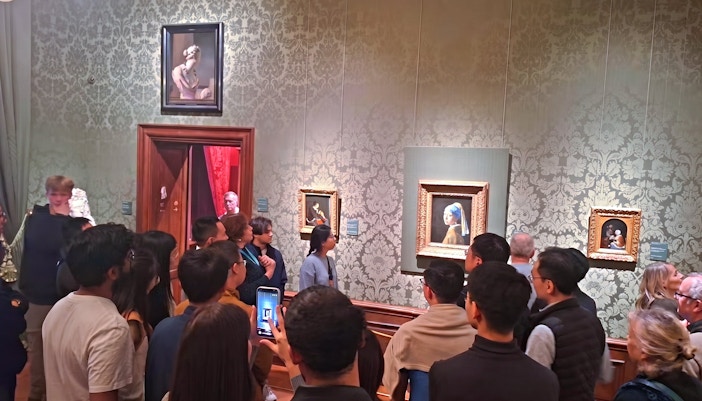
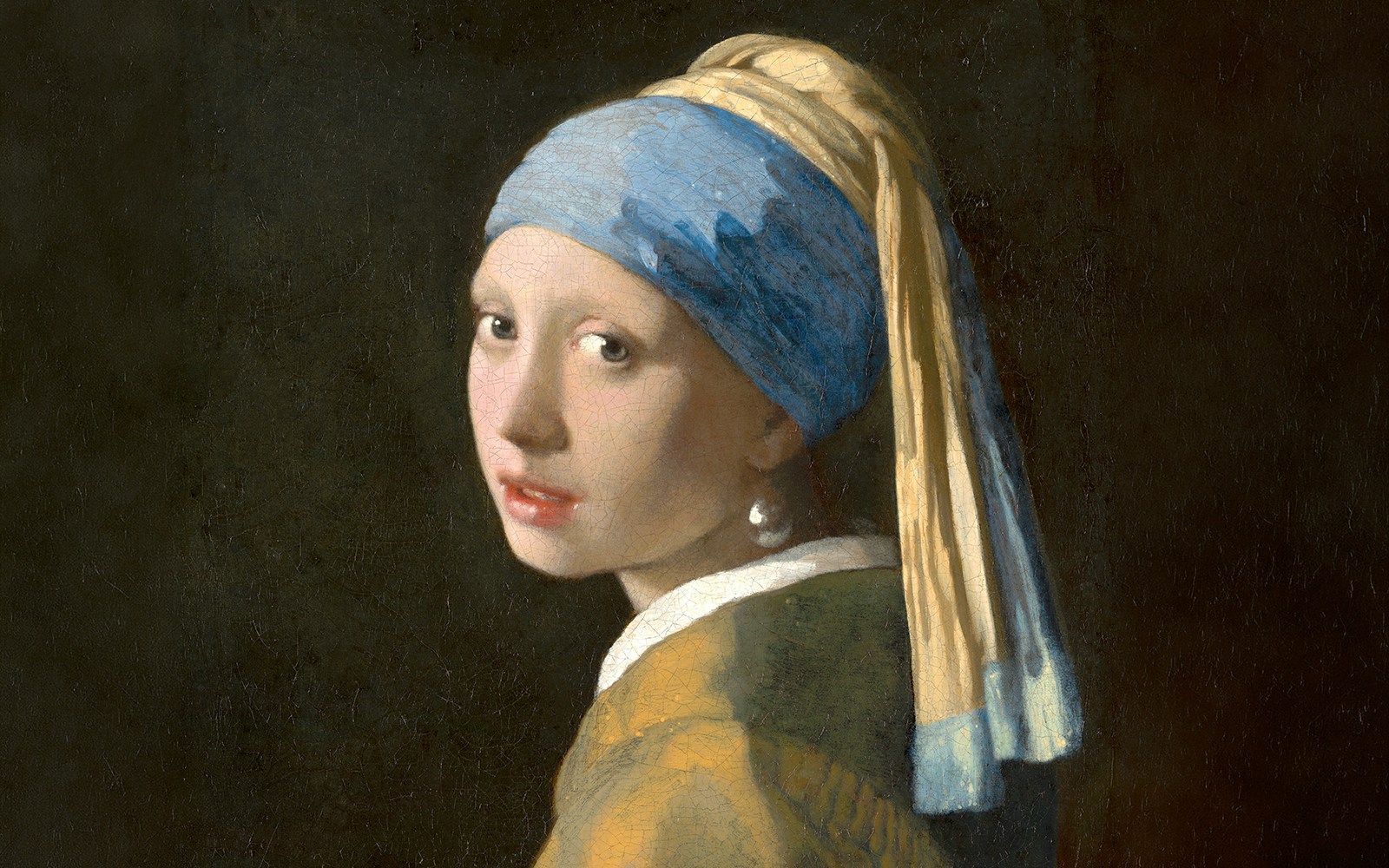
Vermeer’s Girl with a Pearl Earring, the museum’s most famous painting, is often called the 'Mona Lisa of the North' and measures just 44.5 x 39 cm.

The Goldfinch by Carel Fabritius is a tiny masterpiece renowned for its trompe-l’œil illusion and delicate brushwork.

Why is Mauritshuis a must-visit attraction?

Located in the historic centre of The Hague, Mauritshuis offers far more than a typical museum experience—it feels like a compact journey through some of the most defining moments of Dutch art history. Housed in an elegant 17th-century palace that once served as the residence of a Dutch count, the building itself already feels like stepping into a different era before you even see a single painting.

What makes Mauritshuis truly special is the quality and intimacy of its collection. Unlike large museums where masterpieces can feel distant, here you stand just steps away from world-famous works such as Girl with a Pearl Earring by Vermeer and The Goldfinch by Fabritius, creating a calm, personal atmosphere where you can truly connect with the art.

Its central location makes it even more appealing—right next to the Binnenhof and Hofvijver, it fits effortlessly into any itinerary. Whether you're an art lover or a casual visitor, Mauritshuis delivers a rich cultural experience in a beautifully understated setting, making it an essential stop in the city.

What to see at Mauritshuis in The Hague
Dutch Golden Age masterworks
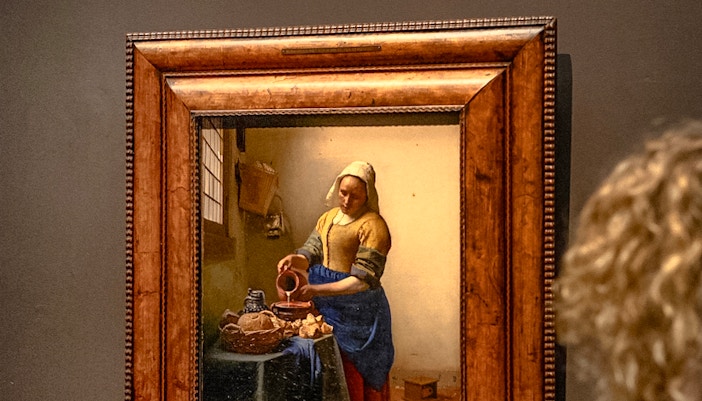
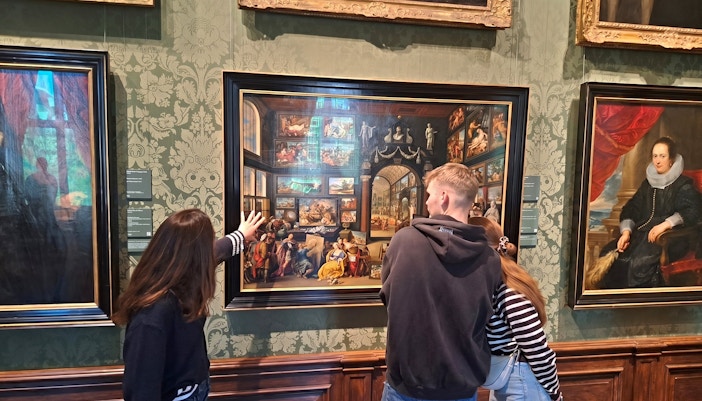
The collection at Mauritshuis is set inside an elegant 17th-century palace where every room feels calm and carefully composed. Admire Dutch Golden Age paintings that bring together portraits, still lifes, and storytelling scenes, all defined by fine detail, realism, and strong narrative clarity.

Vermeer's Collection

The Mauritshuis is especially known for its Johannes Vermeer collection. Girl with a Pearl Earring is displayed in an intimate room, where its soft light and mysterious expression stand out. Nearby, View of Delft reveals a quiet, atmospheric cityscape, showcasing Vermeer’s mastery of light and reflection.

Rembrandt and Portrait Art

The museum’s portrait rooms include Rembrandt van Rijn’s The Anatomy Lesson of Dr. Nicolaes Tulp and his late masterpiece Self-Portrait (1669). These works draw attention with their dramatic lighting and intensity, making the figures feel strikingly present and deeply human.

Everyday Life Scenes

Apart from famous Dutch artworks, the Mauritshuis also features everyday life scenes like The Merry Family, capturing lively household moments filled with music and gentle chaos and turning the ordinary into engaging storytelling.

Still Lifes and Fine Detail

Still lifes and fine detail define the Mauritshuis collection. Works like Still Life with Cheeses, Almonds and Pretzels, The Bull, and Saul and David showcase texture, symbolism, and keen observation, turning everyday subjects into powerful compositions.

Highlights of Mauritshuis in The Hague
Mauritshuis museum entrance with floral decorations and historic architecture in The Hague.

Girl with a Pearl Earring

Vermeer’s most iconic painting draws you in with its simplicity and quiet mystery. The soft lighting, dark background, and subtle expression make it one of the most recognisable portraits in art history.

Placeholder Image Headout Blimp

Brief history of Mauritshuis in The Hague

The Mauritshuis was built between 1636 and 1641 as the residence of Count Johan Maurits of Nassau-Siegen, a Dutch governor of Brazil and an important figure in the Dutch Republic. Designed during the Dutch Golden Age, the building reflected his wealth, status, and interest in art and science.

After Johan Maurits returned to Europe, the building changed ownership several times. In 1822, it officially opened as the Royal Cabinet of Paintings, marking its transformation into a public museum in The Hague. Over the centuries, the collection expanded to include world-famous works by artists such as Vermeer, Rembrandt, and Fabritius. A major renovation and expansion completed in 2014 linked the original 17th-century palace with a modern extension, improving gallery space while preserving its historic character.

Who built Mauritshuis?

Mauritshuis was designed by Jacob van Campen, with Pieter Post contributing to its execution and detailing. It was commissioned for Count Johan Maurits of Nassau-Siegen in the early 17th century. The design reflects classical principles of symmetry, proportion, and restrained elegance inspired by Renaissance architecture.

Architecture of Mauritshuis in The Hague

The Mauritshuis is one of the finest examples of Dutch Classicist architecture, built between 1636 and 1641. Designed by Jacob van Campen with Pieter Post, it reflects the ideals of balance, symmetry, and harmony typical of the Dutch Golden Age.

The building follows a strict rectangular layout with evenly spaced windows and a central stair hall, emphasizing order and proportion. Its sandstone façade, pilasters, and classical pedimented roofline reflect its original purpose as a grand private residence for Count Johan Maurits of Nassau-Siegen.

Over time, the building was adapted for museum use, with careful preservation of its historic structure. A modern extension completed in 2014 added underground facilities and expanded exhibition space, seamlessly connecting contemporary architecture with the original 17th-century palace.

Frequently asked questions about Mauritshuis in The Hague

A visit to Mauritshuis typically takes about 1 to 2 hours, depending on interest in the collection. The museum is compact, with a focused selection of Dutch Golden Age paintings displayed across a small number of galleries.

More reads

Timings

Directions

Plan your visit